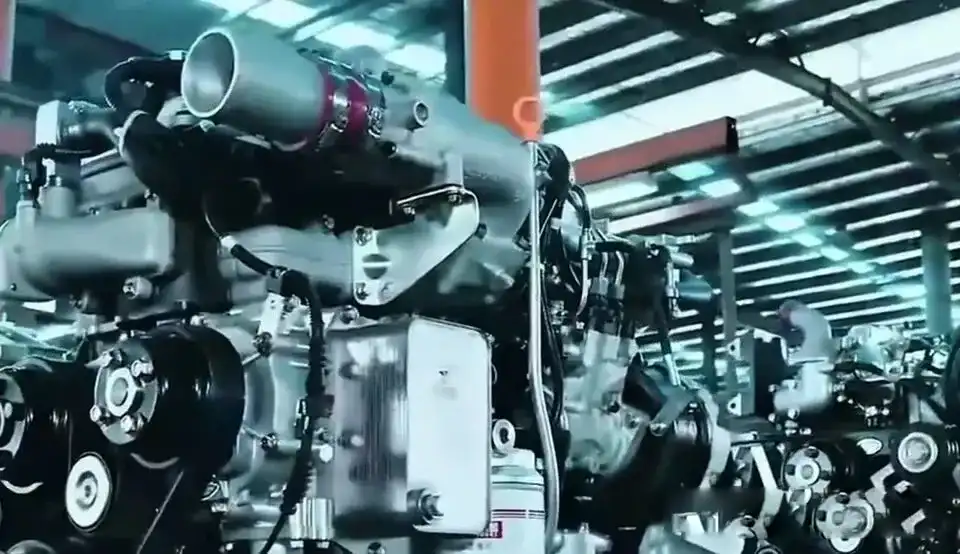
Why don’t diesel engines rely on spark plugs for ignition? They weren’t phased out of passenger cars; instead, they found a more suitable arena.
While both gasoline and diesel engines convert fuel into power, gasoline engines need spark plugs to “ignite” it, while diesel engines don’t. They rely on a higher compression ratio, compressing air to a high temperature before injecting atomized diesel fuel for spontaneous combustion.
The true core advantage of diesel engines isn’t that diesel fuel is easier to ignite, but rather the high efficiency and high torque resulting from compression and spontaneous combustion. This also explains a common phenomenon: diesel engines are more robust and heavier, with stronger low-speed pulling power, but they aren’t suitable for all passenger cars.
The primary difference between diesel and gasoline lies in their combustion methods.
Diesel, unlike gasoline, doesn’t readily evaporate into a high-concentration fuel-air mixture at room temperature, making it difficult to ignite directly with an open flame. It’s crucial to distinguish between “flammability” and “auto-ignition conditions”: diesel isn’t incapable of combustion, but it requires reaching a suitable temperature and being thoroughly mixed with air in an atomized state before it can burn rapidly.
Gasoline engines work by first forming a mixture of gasoline and air, then controlling the ignition timing with a spark plug. Gasoline’s high volatility makes it suitable for this pre-mixed combustion, but the compression ratio cannot be too high; otherwise, the mixture might self-ignite before the spark plug ignites, causing knocking.
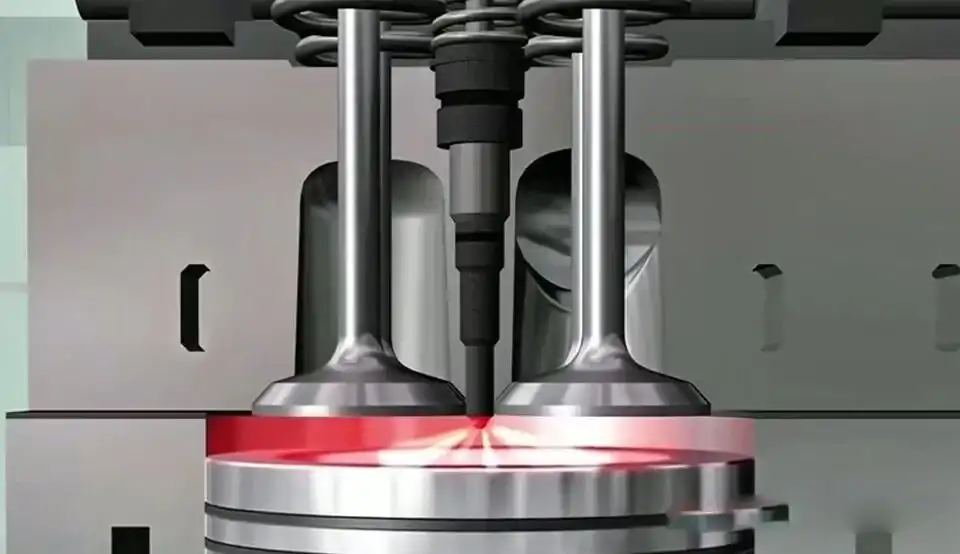
Diesel engines operate in the opposite way. The intake stroke only draws in air, while the compression stroke forcefully compresses the air, raising the cylinder temperature. At the power stroke, the fuel injector injects diesel fuel into the combustion chamber in a high-pressure atomized form. The diesel fuel self-ignites upon encountering the hot air, and the combustion expansion pushes the piston downwards.
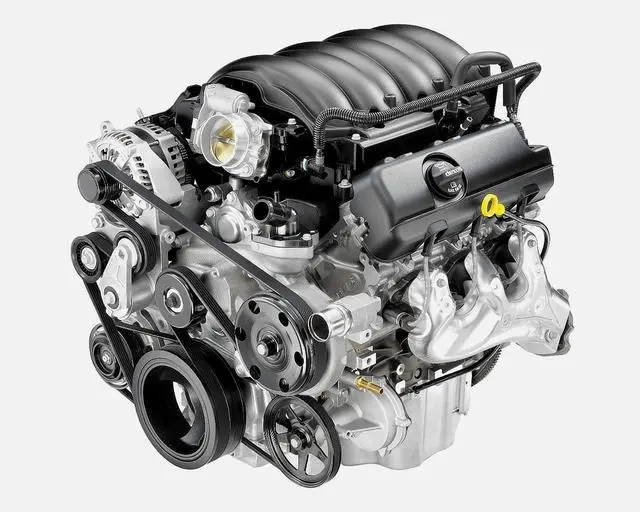
Diesel engines also follow four basic strokes: intake, compression, power, and exhaust. However, the timing of fuel injection differs from gasoline engines.
During the intake stroke, the piston moves downward, the intake valve opens, and the cylinder primarily draws in air, not the pre-mixed fuel-air mixture. During the compression stroke, the piston moves upward, and the air is compressed to a high temperature and pressure. This step determines whether the diesel engine can achieve compression auto-ignition.
Before the power stroke begins, the fuel injection system injects diesel fuel into the combustion chamber. Unlike gasoline, diesel fuel isn’t ignited by a single spark plug; instead, it releases energy gradually through spraying, evaporation, mixing, and auto-ignition. The exhaust stroke is responsible for expelling the combusted exhaust gases from the cylinder, allowing them to enter the next cycle.
The “ignition system” of a diesel engine is actually replaced by the compression process: compressed air generates the temperature, and high-pressure fuel injection controls fuel entry. This is why diesel engines have very high requirements for injection pressure, injection timing, and atomization.
Why do diesel engines, despite their high torque, often give the impression of emitting black smoke?
Diesel engines are commonly used in heavy trucks, ships, and agricultural machinery. This isn’t just due to the energy characteristics of diesel fuel itself, but more importantly, because they employ a high compression ratio and lean-burn combustion strategy, enabling them to deliver strong traction at lower speeds. This low-speed torque advantage is more valuable than high-speed power during heavy-load starts, hill climbs, and sustained loads.
However, the combustion process in diesel engines also relies heavily on the thorough mixing of air and fuel. Excessive fuel injection, insufficient air intake, poor atomization, or abnormal combustion control can all lead to localized oxygen deficiency, producing carbon soot, which ultimately manifests as black smoke. Modern diesel vehicles have significantly reduced these emissions through high-pressure common rail systems, turbocharging, intercooling, particulate filters, and exhaust aftertreatment systems, so the notion that “all diesel vehicles emit black smoke” is no longer accurate.
To cope with higher cylinder pressures, diesel engines typically require more robust cylinder blocks, crankshafts, connecting rods, and pistons, resulting in heavier components. This structural strength translates to durability and load-bearing capacity, but it also increases engine weight, size, manufacturing costs, and the difficulty of noise and vibration control.
It hasn’t been phased out, just hasn’t fully penetrated the small passenger car market.
For heavy trucks, construction machinery, ocean-going vessels, and agricultural machinery, the value of diesel engines is very clear: under prolonged high-load operation, low-speed torque, fuel economy, and durability are more important. Vehicles need to tow significant weight, and the engine doesn’t need to frequently rev at high speeds; the operating characteristics of diesel engines perfectly match this scenario.
The needs of passenger cars are different. Urban commuting prioritizes quietness, smoothness, lightweight design, low cost, and emissions control; vehicles also don’t need to withstand prolonged heavy loads. The higher manufacturing complexity, greater weight, and stringent requirements for emissions aftertreatment and fuel quality of diesel engines diminish their appeal in small passenger vehicles.
This isn’t because diesel engine technology is outdated, but rather a difference in product priorities. Gasoline engines are better suited for light and quiet daily commutes, while diesel engines are better suited for stable and efficient heavy-load operation; the widespread adoption of new energy powertrains has further compressed the market share of diesel engines in some urban passenger car markets.
Diesel engines haven’t lost out to gasoline engines; the competition has simply shifted from “who’s best suited for everyone” to “who’s best suited for high-load scenarios.”
The true measure of a diesel engine’s value isn’t whether it can be installed in a passenger car, but whether the vehicle requires its low-speed traction, continuous operating capability, and fuel efficiency. For heavy trucks, ships, and agricultural machinery, this technology remains difficult to replace easily; for cars primarily used for urban commuting, gasoline or electric drive solutions are generally more suitable.
If you had to choose between “quiet and smooth” and “low-speed traction,” would you put a diesel engine back in heavy-duty tools, or accept its weight, noise, and maintenance costs for your passenger car?